Hey, I’m Matt. You’re reading AI Street, where I cover how Wall Street uses AI. On Tuesdays, I report on how a firm is using AI, talk with an expert, or dig into new research.
The AI buildout may hit $10 trillion by 2032, which would make it the biggest bet in US history relative to the economy, according to one projection.
And yet, renting the hardware behind this boom -- GPUs -- is like booking a vacation in the 1980s. You call a few travel agents, ask what’s available, compare prices and hope for the best.
Nerdy finance people call this information asymmetry: The seller often has way more information than the buyer. And this opacity makes it hard to know if you’re getting a good deal. Last year, Simeon Bochev, then CEO of Compute Exchange, told me about a startup that secured GPU capacity through a supplier co-founded by one of its advisers. Bochev put the price at 30% to 40% above the going rate at the time.
This won’t last forever and already there are some firms adding transparency to the computing market. But it will take a few years.
For more, here are my earlier conversations with Silicon Data’s Carmen Li and Compute Exchange’s Simeon Bochev.


And on top of this opacity, there’s a mismatch between buyers and sellers.
GPU owners want to sign long, steady contracts with established counterparties. GPU renters often want short-term access and don’t have much of a track record.
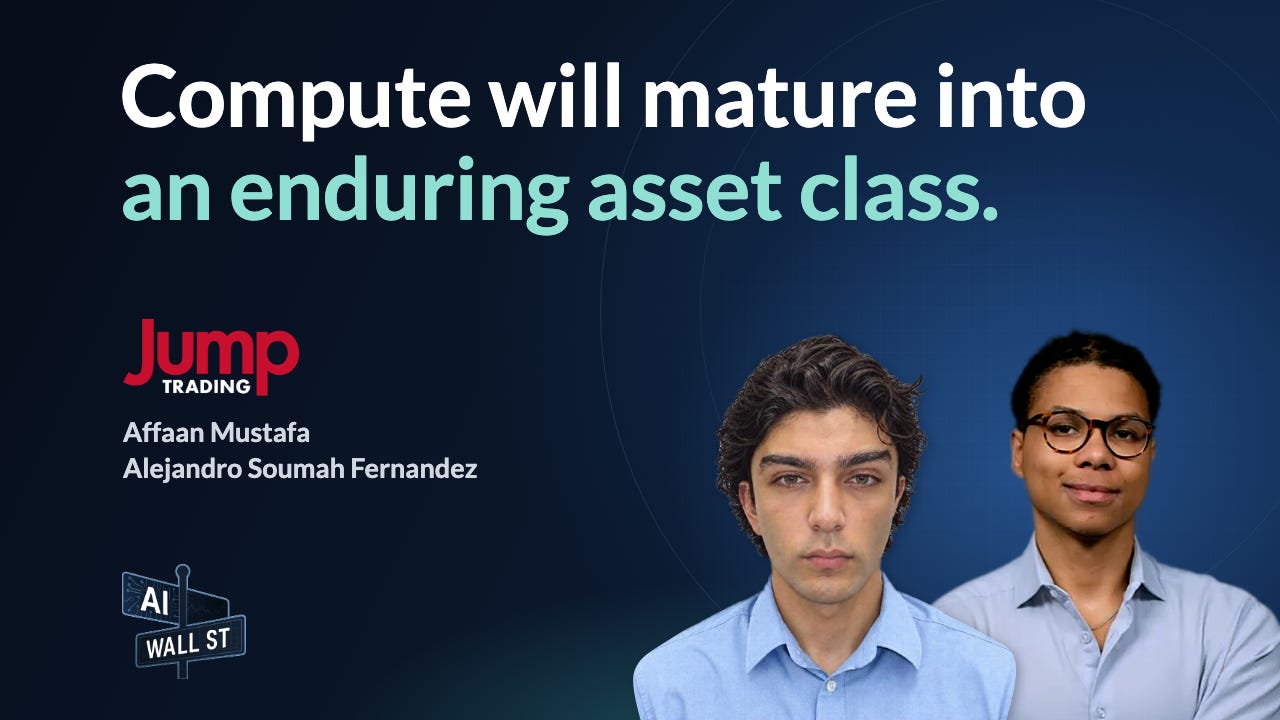
This disconnect is what Affaan Mustafa and Alejandro Soumah Fernandez set out to solve at Itô Markets. “We realized that compute was the biggest risk that corporations and many companies were facing,” Alejandro said. “It is extremely expensive, volatile, and there was a simultaneous supply crunch that made it difficult for startups to access compute and to protect against price fluctuations.”
The Itô team joined Jump Trading in October to lead a new compute trading desk. Jump Trading has backed Silicon Data, which tracks GPU rental prices, since co-leading its seed round with DRW in March 2025. Jump invested again in August. (See my interview above with Silicon Data’s Carmen Li.) Jump has brought in specialist teams before. In 2021, it bought Certus One, a blockchain engineering firm, as it built out its crypto business.
In a conversation about what it would take to make computing power trade like other commodities, Mustafa said the desk is bringing together GPU capacity and offering it to customers “in smaller blocks with more flexible terms.”
I also spoke with Mustafa and Soumah Fernandez about:
How GPU deals get done today. Itô built an agent to match buyers and sellers in places they were already doing business, including Slack and WhatsApp.
What a standard GPU contract might look like. Even basic terms like memory and storage need common definitions before buyers can easily compare one offer with another.
Whether AI tokens could become a market of their own. Soumah Fernandez drew a parallel to crude oil and the markets for products made from it, like gasoline and kerosene.
PRESENTED BY BRICKROAD
Meet Scouts: Your AI Team for Data Search
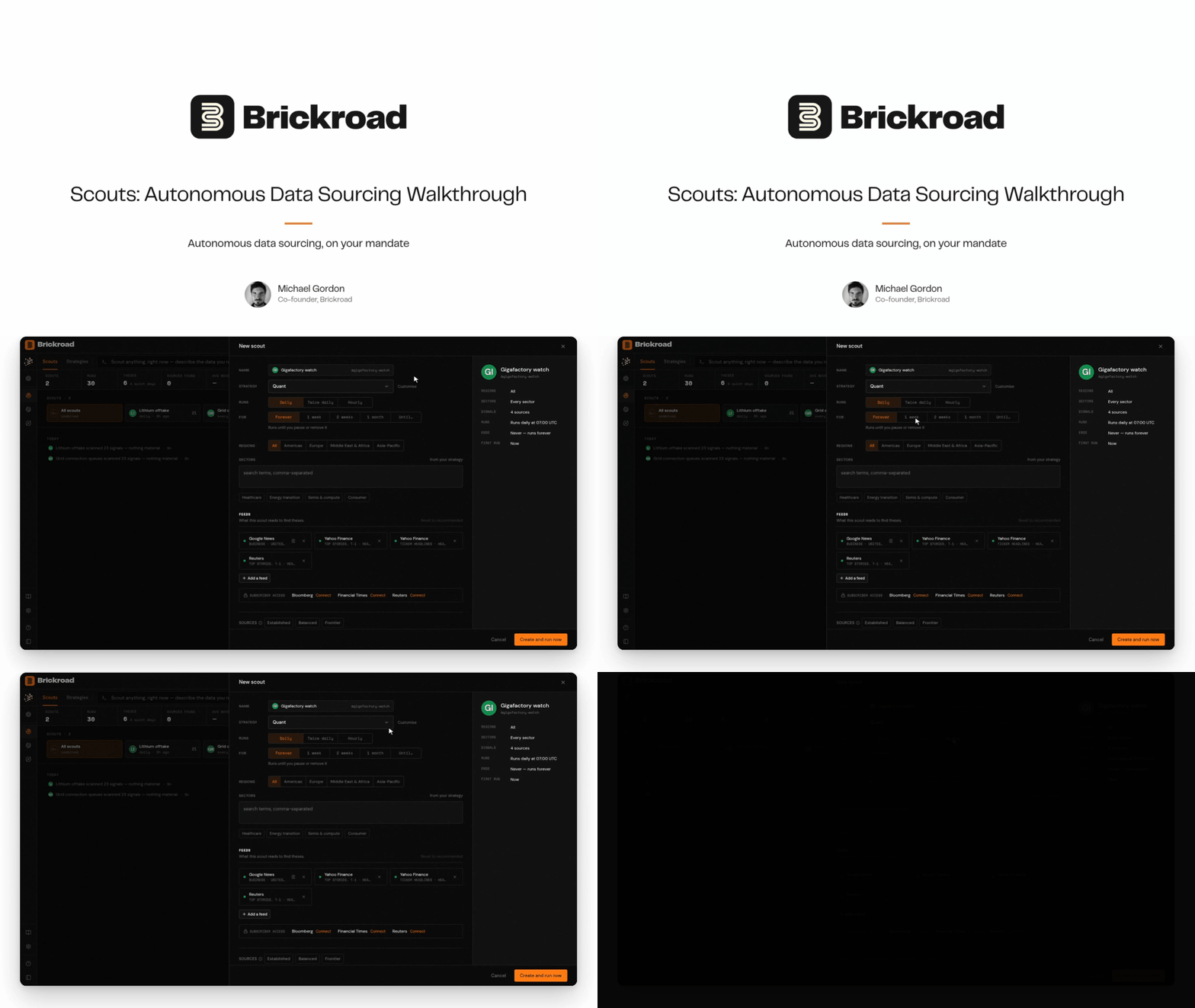
Brickroad has launched Scouts, an always-on AI data sourcing team that finds datasets, spots new suppliers and gets you samples to evaluate.
Give a scout a strategy, a mandate and a schedule. On each run, it reads Brickroad’s internal market signals and news feeds you can configure, then launches agents to find data that fits your requirements.
Review the datasets and suppliers it finds, then select the samples you want. Brickroad’s agents contact the suppliers, arrange access and fetch samples you can review, download or analyze.

This interview has been edited for clarity and length.
Matt: Before joining Jump Trading, you were building Itô Markets, a business around compute markets. What were you focusing on?
Alejandro: We started Itô Markets as a way of helping corporations hedge their risk through frontier markets. That included prediction markets, as well as any sort of new financial instrument.
Over time, we realized that compute was the biggest risk that corporations and many companies were facing. It is extremely expensive, volatile, and there was a simultaneous supply crunch that made it difficult for startups to access compute and to protect against price fluctuations.
We built an agent that could connect suppliers and buyers of compute and act as principal, buying from one side and selling to the other side.
Given that compute is highly diverse and every contract is different, the agent adapted each contract to the specific requirements of the customer. Essentially, we were incentivizing the creation of a liquid compute market by having this agent act as a market maker.